0 → X
from zeroscaping to xeriscaping
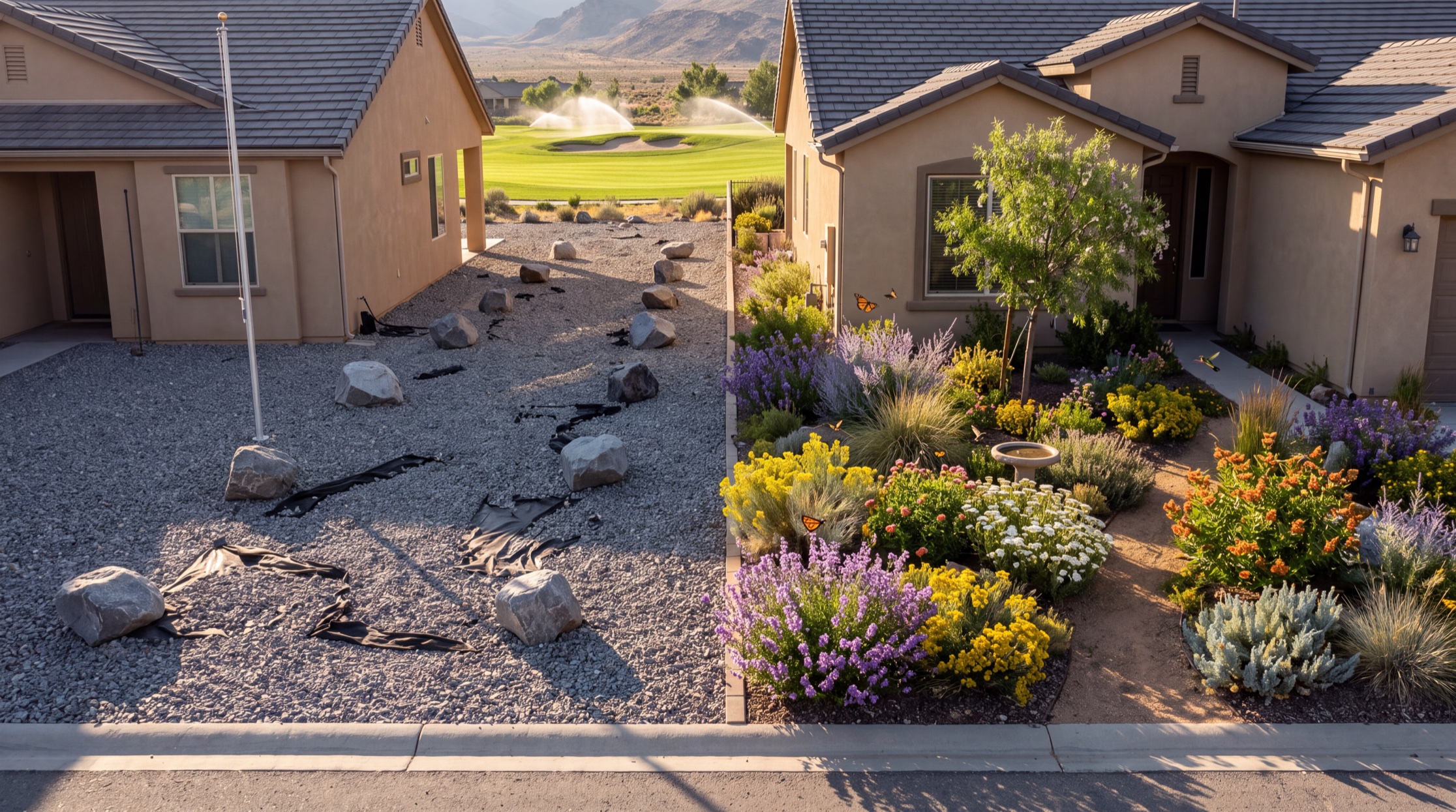
Two houses. One water district. One afternoon. The only difference is what somebody decided to do with the ground.
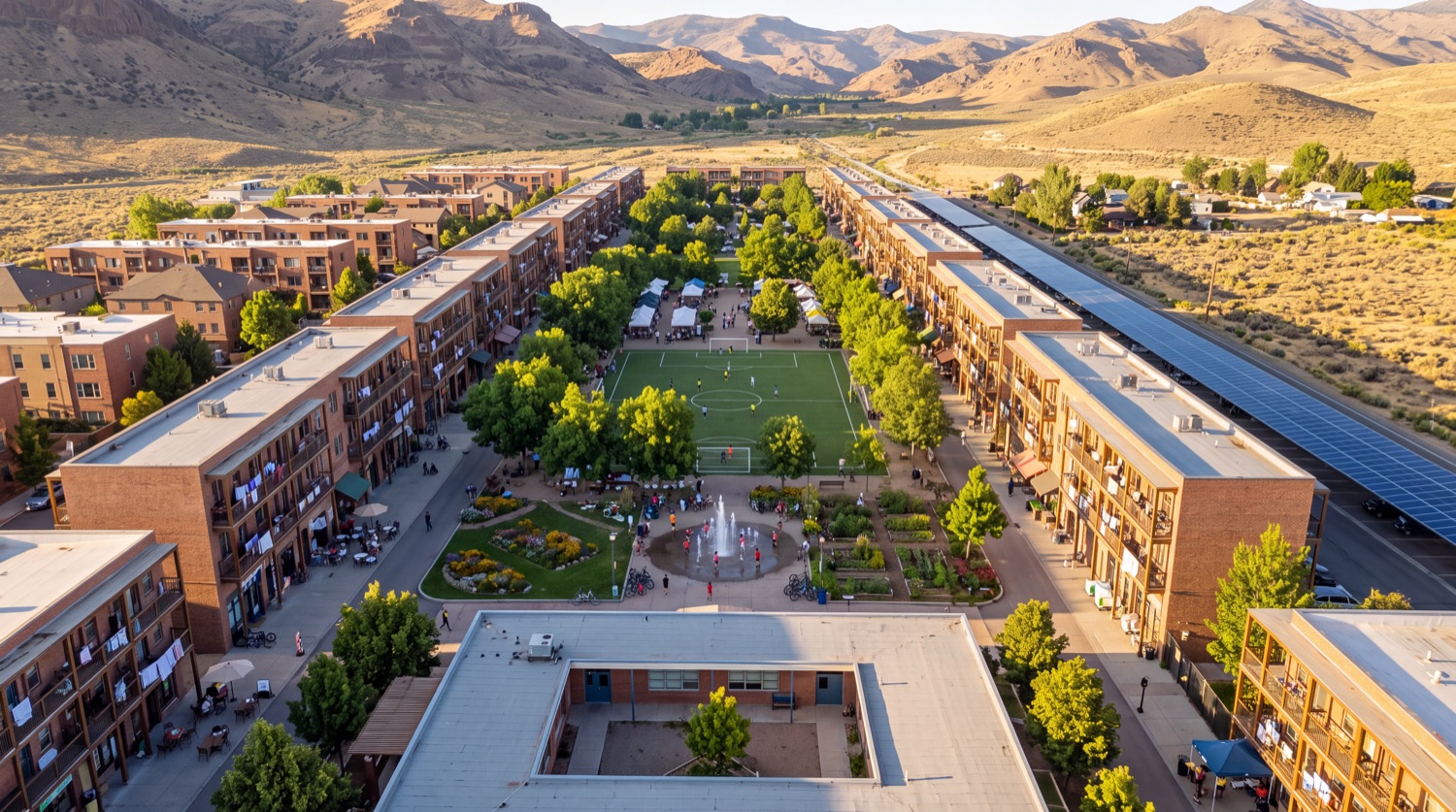
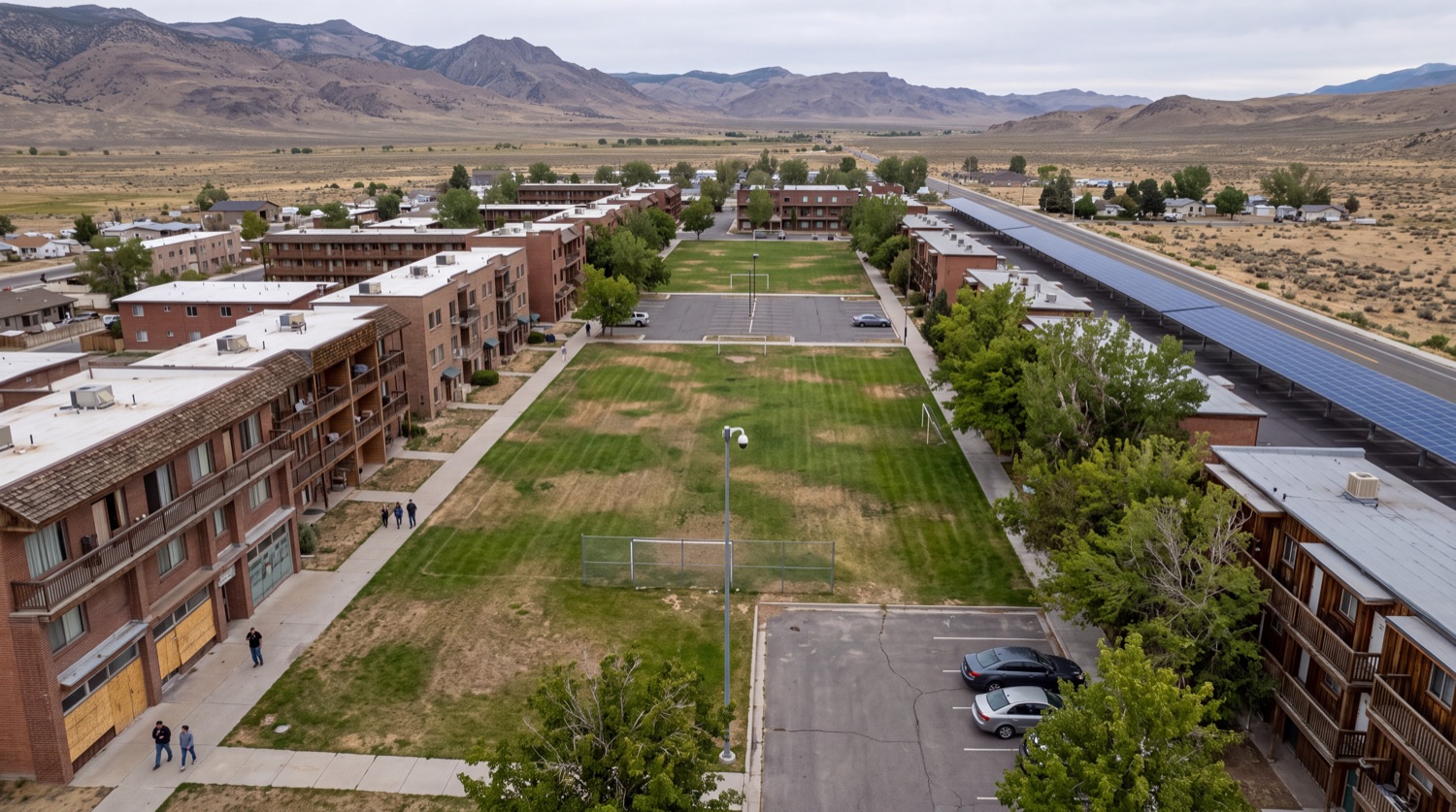
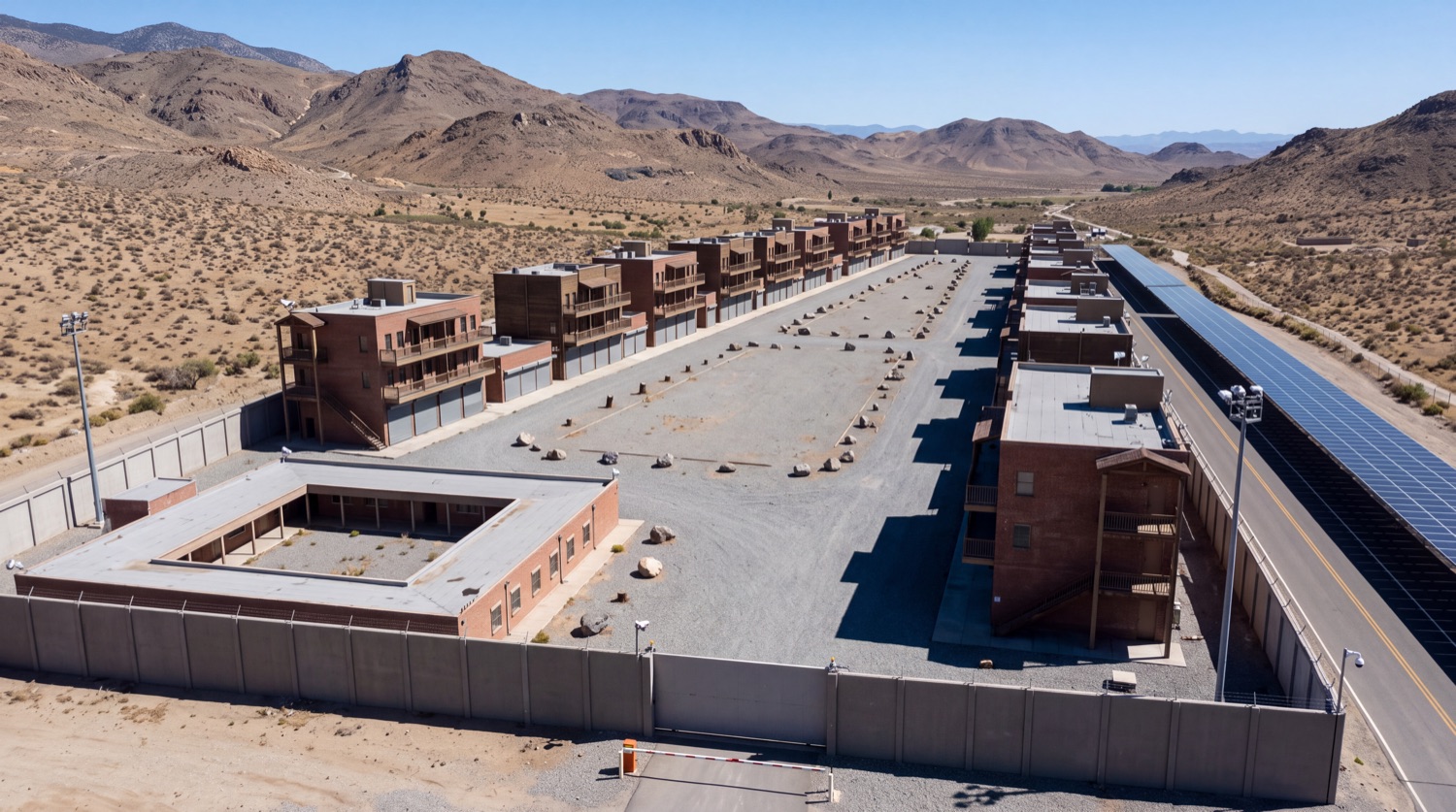
Nine images. The same buildings in every one. Same layout, same blocks, same road, same camera. Only the fences and the upkeep change.
Ranked by a machine on one axis, and it is worth saying exactly which: can you get in, can you stay, is anything alive, and is there a way out. Not a moral score. Not a measurement. Just the order these fall into when you sort them by who is allowed to be there.
0-X · the neighbourhood
0-Y · the school

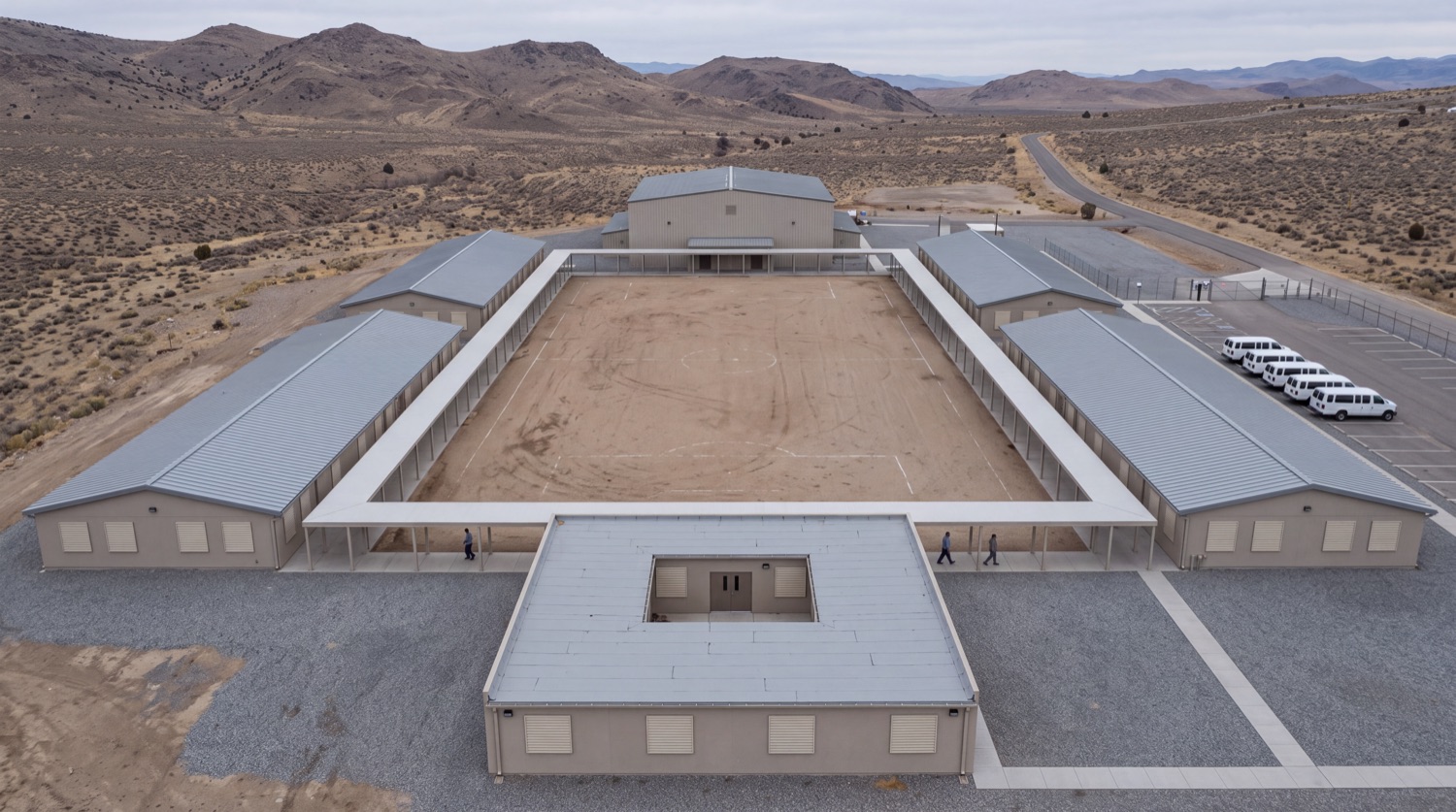
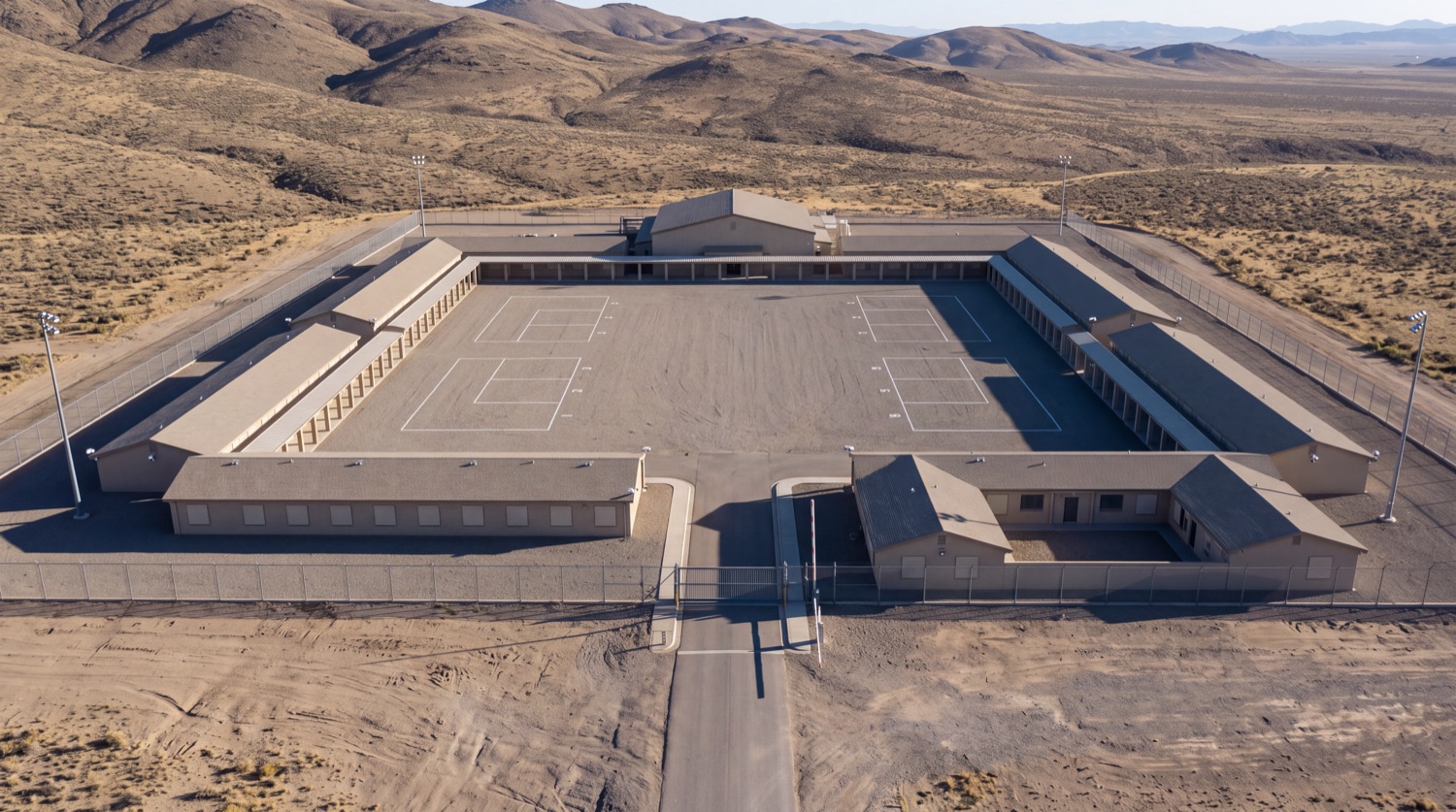
the golf course · and the condos


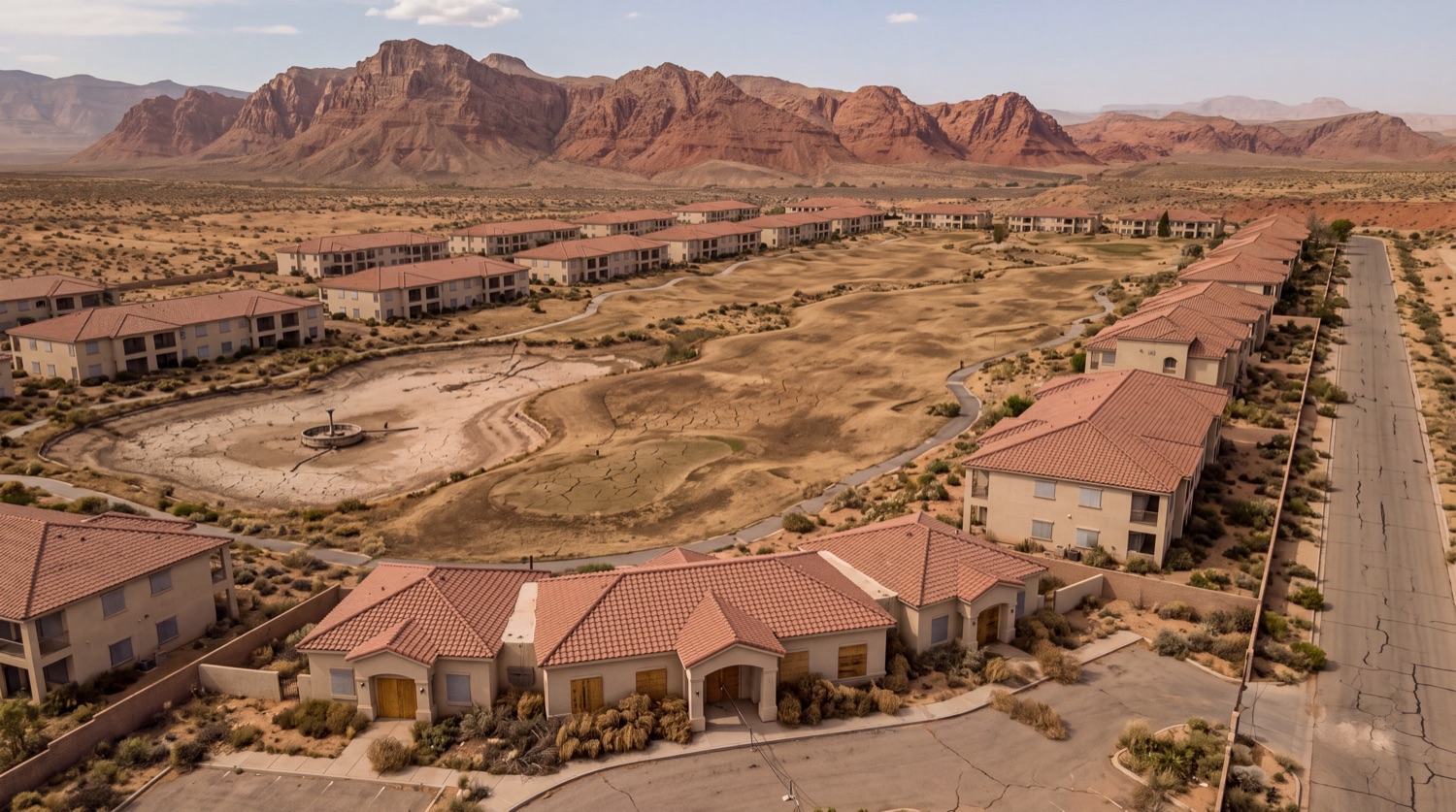
Column two to column one.
That is the whole goal.
The third column is not the message. It is only what happens if nobody does anything — you raise a fence that already exists and stop unlocking it. Nobody has to decide to build it. That is why it is on the page.
The work is the other direction, and it is smaller than it looks. Column two is not broken. The buildings are sound, the road is there, the pipes are in the ground. What is missing is water, shade, and a reason to walk outside — and one of those three is the reason for all of this.
Which is also why the projects and the country club sit in the same column. One is poor and one costs a million dollars, and they score the same, because a wall with a guardhouse and a chain-link across a green are the same object doing the same job. Both of them are one decision from the first column and one budget cycle from the third.
Still good infra.